

If your weekend WhatsApp groups are suddenly full of court bookings, you’re not imagining it. Pickleball has gone from a quirky import to one of the fastest-growing social sports around, and it’s easy to see why. It’s fun, easy to pick up, and works for almost any age.
That “easy to pick up” part is also the problem. Many players walk onto the court after months of desk work, play three hard games back to back, and wake up the next morning with a sore elbow, a tight calf, or a shoulder that won’t lift properly.
At Evoque Physio, we’re seeing the same pattern more and more: enthusiastic beginners, returning athletes, and parents playing with their kids, all ending up with preventable injuries. Here’s what’s going wrong and how to stay on the court.
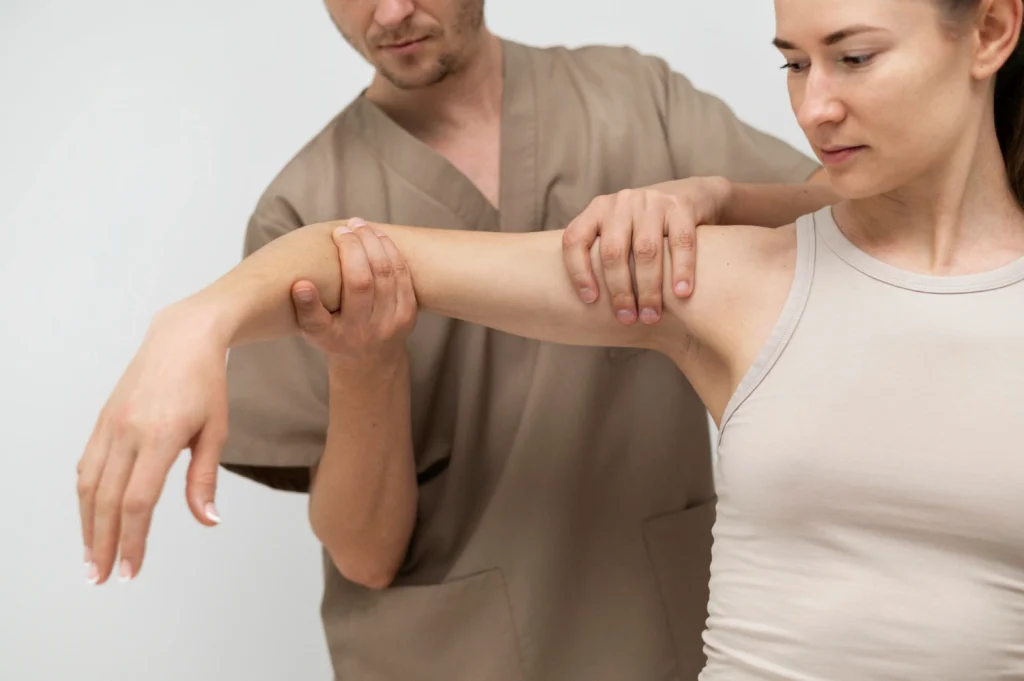
Why Pickleball Injuries Happen
The court is small, but the movement demands are not. Pickleball involves quick starts and stops, sideways shuffles, sudden lunges, and repeated overhead and wrist-heavy shots. For a body that spends most of its week seated, that’s a big jump in load.
The most common reasons players get hurt:
- Too much, too soon. Going from zero activity to several games a week doesn’t give tendons and joints time to adapt.
- Skipping the warm-up. Stepping straight into rallies with cold muscles is a fast way to strain something.
- Weak hips, core, and shoulders. When the big stabilising muscles are underused, smaller joints like the elbow and ankle take the strain.
- Poor footwear. Running shoes are built for forward motion. Court sports need lateral support.
- Gripping too hard. A tense, tight grip on the paddle overloads the forearm and elbow.
The Most Common Pickleball Injuries
1. Pickleball Elbow (Lateral Epicondylalgia)
Pain on the outer side of the elbow, often worse when gripping, lifting a cup, or shaking hands. It develops from repeated stress on the forearm tendons, usually from tight grip, repetitive backhands, or a paddle that’s too heavy or has the wrong grip size.
2. Ankle Sprains
Quick lateral movement and stepping on a ball or another player’s foot are classic causes. A sprain that isn’t properly rehabbed often leaves the ankle unstable, which makes re-injury much more likely.
3. Shoulder Pain
Overhead smashes, serves, and repeated reaching can irritate the rotator cuff, especially if shoulder blade control and upper back mobility are poor.
4. Knee Pain
Deep lunges, pivoting, and sudden stops can aggravate the kneecap or the structures around the joint, particularly when the hips and thighs aren’t strong enough to share the load.
5. Calf and Achilles Strains
The sudden push-off that comes with chasing a drop shot can overload the calf and Achilles tendon, especially in players returning to sport after a long break.
6. Lower Back Tightness
Constant bending, twisting, and reaching with a stiff or weak core can leave your lower back sore the next day.
How to Prevent Pickleball Injuries
Warm up for 8 to 10 minutes. Start with a brisk walk or light jog, then add leg swings, hip circles, arm circles, and gentle lunges. Finish with a few slow shadow swings.
Build up gradually. If you’re new, start with shorter sessions and add time over a few weeks. Leave a rest day between hard sessions.
Strengthen what the game demands. Three areas matter most:
- Hips and glutes, for stability and lateral movement
- Calves and ankles, for push-off and landing
- Shoulder blade and rotator cuff muscles, for overhead and reaching shots
Check your gear. Wear court shoes with good lateral support, and pick a paddle with a grip size that lets you hold it comfortably without squeezing.
Relax your grip. Aim to hold the paddle firmly but loosely, like holding a bird. A tight grip is one of the biggest triggers for elbow pain.
Cool down and recover. Gentle stretching and enough sleep matter more than most players think.
When Should You See a Physiotherapist?
Mild muscle soreness after a new activity is normal. Book an assessment if you notice:
- Pain that lasts more than a few days or keeps coming back
- Pain that gets worse with gripping, lifting, or overhead movement
- Swelling, instability, or a “giving way” feeling in the ankle or knee
- Pain that wakes you at night
- Reduced range of motion or weakness
Playing through pain usually turns a small problem into a long one. Early assessment often means fewer sessions and a faster return to the court.
How Physiotherapy Helps Pickleball Players
At Evoque Physio, we don’t just calm the pain down and send you back out. Treatment looks at why the injury happened in the first place:
- Thorough assessment of your movement, strength, flexibility, and playing habits
- Hands-on manual therapy to ease stiffness and reduce pain
- Targeted strengthening for the muscles that protect your elbow, shoulder, knee, and ankle
- Movement and technique coaching so you stop repeating the pattern that caused the injury
- A gradual return-to-play plan so you get back to the game confidently, not cautiously
Whether it’s a first-time ankle sprain or an elbow that’s been nagging for months, our sports injury recovery and proactive injury prevention programmes are built around one goal: keeping you active for the long run.
The Bottom Line
Pickleball is a brilliant way to stay active and social, and you don’t have to give it up to stay injury-free. A smart warm-up, gradual progression, a bit of strength work, and early attention to pain make all the difference.
Feeling a twinge you can’t shake? Don’t wait for it to become a problem. Book an assessment with the team at Evoque Physio, Sector 69, Gurugram, or call +91 86859 83033 and get back to playing pain-free.
